-
UNITED HEALTH CENTRE 2,ELLIOT ROAD, KOLKATA - 700016
UNITED HEALTH CENTRE 2,ELLIOT ROAD, KOLKATA - 700016
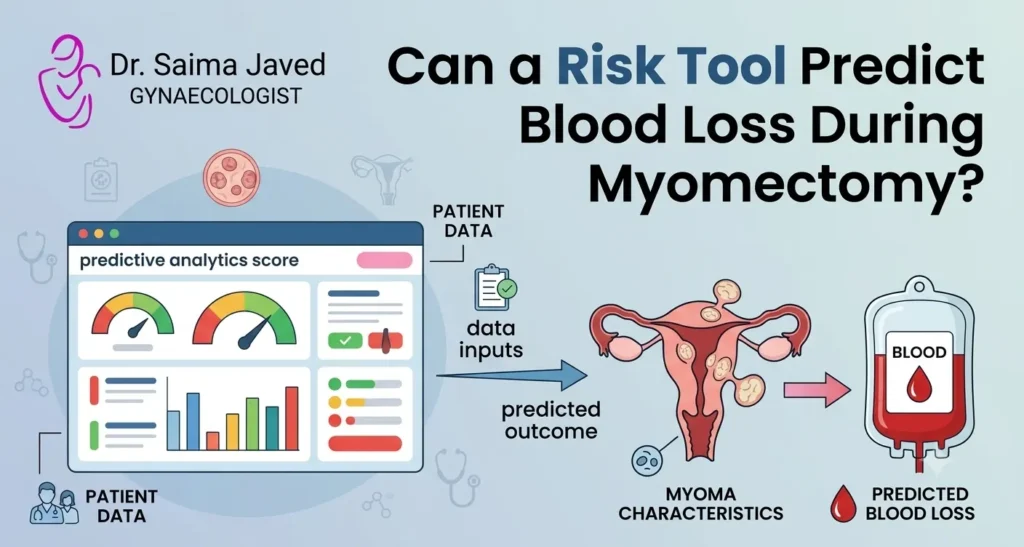
Can blood transfusion requirements be predicted before myomectomy? A risk stratification tool may help doctors identify women who face a higher risk of significant blood loss during laparoscopic fibroid surgery. If you are considering treatment, consulting the Best Laparoscopic Myomectomy Doctor in Kolkata, such as Dr Saima Javed, can help you understand surgical risks, available options, and appropriate preoperative assessments.
Uterine fibroids can cause heavy menstrual bleeding, pelvic pressure, pain, and fertility concerns. For women considering minimally invasive surgery, understanding the possibility of blood loss can make preoperative planning more informed.
Dr Saima Javed is a gynecologist who can consider consulting about fibroid treatment options. During the consultation, patients can review their symptoms, ultrasound results, preferred treatment options, and potential risks associated with surgery. The appropriate treatment depends on each patient’s clinical assessment rather than a risk score alone.
A July 2024 study in the American Journal of Obstetrics & Gynecology explored factors associated with blood transfusion during laparoscopic myomectomy. The researchers examined data from 11,498 women who underwent laparoscopic or robotic-assisted myomectomy between 2012 and 2020. Of these women, 331, or approximately 2.9%, received a blood transfusion within the study’s defined period.
The researchers developed two risk stratification tools:
These tools may help clinicians plan surgery, counsel patients, and prepare for potential complications. However, the researchers noted that further validation is necessary before the tools can be considered reliably applicable across different patient populations and healthcare settings.
A risk prediction tool combines relevant patient and surgical characteristics to estimate the likelihood that a woman may need a blood transfusion. It does not directly measure blood loss or guarantee what will happen during an operation.
Doctors may consider the following factors:
The 2024 study identified preoperative haematocrit of 35% or lower, bleeding disorders, and higher American Society of Anesthesiologists (ASA) physical status classifications among the factors associated with transfusion. Its combined model also identified specimen weight above 250 grams, five or more intramural fibroids, and longer operating time as relevant factors.
Importantly, these findings describe statistical associations. They do not mean that every woman with one or more risk factors will need a transfusion.
Understanding individual risk factors can help women prepare for discussions with their gynecologist.
| Risk factor | Why it matters | What doctors may consider |
| Preoperative anaemia | Lower blood reserves may make blood loss harder to tolerate | Complete blood count and treatment of iron deficiency when indicated |
| Bleeding disorder | Clotting problems may increase bleeding risk | Medical history and appropriate investigations |
| Multiple intramural fibroids | Removing several fibroids within the uterine muscle can increase surgical complexity | Imaging review and operative planning |
| Large fibroid burden | A greater amount of tissue may require more extensive surgery | Fibroid mapping and assessment of surgical feasibility |
| Longer expected operation | Complex procedures may involve greater exposure to surgical risks | Surgical approach, available resources, and preparation |
| Other medical conditions | Overall health can influence anaesthesia and recovery | Individualised preoperative assessment |
These factors help guide clinical judgement, but no single factor determines whether a blood transfusion will be necessary.
A thorough assessment helps the surgeon understand the patient’s condition and prepare for possible complications. Women planning laparoscopic myomectomy may benefit from discussing the following points with their gynecologist.
These steps support informed consent and personalised care. They cannot eliminate every surgical risk.
If you are exploring minimally invasive fibroid treatment, look for a gynecologist with relevant experience in myomectomy and access to appropriate surgical facilities.
When evaluating the Best Laparoscopic Myomectomy Doctor in Kolkata, consider:
A Best Multispeciality Hospital in North Kolkata may be worth considering if it offers the necessary gynecology, anaesthesia, laboratory, and emergency support. Confirm the hospital’s current facilities and the surgeon’s availability directly before making a decision.
Contact Dr Saima Javed through her official clinic or hospital to enquire about a consultation, check her current practice location and appointment availability, and confirm whether she provides assessments for laparoscopic myomectomy.
Before your appointment, consider preparing:
If you have severe bleeding, fainting, breathlessness, or sudden intense pelvic pain, seek urgent medical attention rather than waiting for a routine appointment.
Risk stratification tools may help doctors estimate transfusion risk before laparoscopic myomectomy and improve surgical preparation. However, they cannot guarantee outcomes or replace individual assessment. Women considering fibroid surgery should discuss anaemia, fibroid characteristics, fertility goals, and available treatment options with a qualified gynecologist. Dr Saima Javed is a consultation option to explore when seeking personalised guidance about uterine fibroid treatment.
1. Can blood transfusion requirements be predicted before myomectomy?
A risk prediction model can estimate the likelihood of transfusion using clinical information available before surgery. However, it cannot predict every complication, and the 2024 laparoscopic myomectomy model requires further validation.
2. Does every woman undergoing laparoscopic myomectomy need a blood transfusion?
No. In the 2024 study, approximately 2.9% of the 11,498 women studied received a transfusion. Individual risk varies according to clinical and surgical factors, so this figure should not be treated as a personal prediction.
3. Can anaemia increase the risks of fibroid surgery?
Anaemia can reduce the body’s ability to tolerate blood loss. Doctors may check blood counts and treat iron deficiency before planned surgery when appropriate. The best approach depends on the patient’s condition and the urgency of treatment.
4. Is laparoscopic myomectomy suitable for large or multiple fibroids?
It may be suitable for some women, but eligibility depends on the fibroids’ size, number, location, and complexity, as well as the surgeon’s expertise. A gynecologist can explain whether laparoscopy or another approach is more appropriate.
5. How do I book a gynecologist appointment to assess fibroid surgery risks?
Contact the gynecologist’s verified clinic or hospital booking service. Share your symptoms and available investigation reports, and ask whether the consultation includes an assessment of surgical options, anaemia, and bleeding risks.
6. How can I choose the Best Lady Gynecologist in Kolkata for fibroid treatment?
Compare relevant qualifications, experience with fibroid surgery, communication, available facilities, and willingness to explain risks and alternatives. Choose a clinician who respects your treatment preferences and provides realistic, evidence-informed guidance.